Skip to content
There’s something a little personal about the idea of the best books. Ask ten people, and you’ll probably get ten different answers, each shaped by where they grew up, what they’ve lived through, or even what they were going through when they turned a certain page.
Still, some stories have a way of crossing those differences. They stay with you, long after you’ve shut the book. Below, we’ve highlighted five such books, ranging from widely known classics to newer, more grounded ones. Add these to your TBR list for a transformative reading experience.
Provincetown: A Unique Sense of Place – Marcene Marcoux
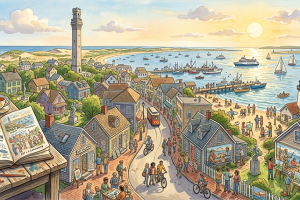
Starting with something less expected feels right here. The book Provincetown: A Unique Sense of Place by Marcene Marcoux opens this list because of its evocative storytelling and deep cultural roots. It perfectly captures the beauty of a quaint coastal town with a kind of intimacy that doesn’t rush the reader.
Among the best books that focus on place rather than plot, this one stands out for how it treats geography almost like a character. The writing invites you to slow down and notice the tiny details you’d normally pass by. It’s especially appealing if you’re drawn to cultural texture, the feeling of a community shaped by art, history, and everyday life.
1984 – George Orwell
Few novels linger in the public imagination like 1984. Orwell didn’t just create a fictional world; he built a warning that still feels uncomfortably relevant. The surveillance, the language control, the slow erosion of personal truth. It all lands differently depending on when you read it, which is why it continues to appear on lists of the best books year after year.
What makes it endure isn’t just the political commentary; it’s the emotional pressure inside the story. The sense that even private thought isn’t safe. That idea sticks with you, whether you want it to or not.
To Kill a Mockingbird – Harper Lee
This is one of those novels that people often meet in school, then rediscover later in life with a completely different understanding. At its surface, it’s about a legal case in a small town. But underneath, it’s about how people learn empathy, or fail to.
Harper Lee’s storytelling is straightforward, almost deceptively simple. Yet it raises questions that don’t have easy answers. That’s part of why it remains among the best books for readers who want fiction that feels grounded in real moral tension.
The Great Gatsby – F. Scott Fitzgerald
There’s a strange beauty in The Great Gatsby. It feels glamorous at first glance, but the shine wears off quickly, revealing something more fragile underneath. Fitzgerald writes about wealth and longing in a way that still feels modern, even though the story is set in the 1920s.
Many readers include it in their list of the best books because it captures disappointment so precisely. Not loud disappointment, but the quieter kind that sits beneath ambition.
Sapiens – Yuval Noah Harari
If fiction shows us emotional truth, Sapiens tries to zoom out and explain the bigger picture. Harari traces human history from early survival to modern systems, and whether you agree with all his interpretations or not, it’s hard not to think differently afterward.
It’s often placed among the best books in modern nonfiction because it doesn’t just present facts. It challenges assumptions about progress, society, and even what we call “normal.” You may not agree with everything in it, and that’s part of the experience- it invites disagreement as much as understanding.
Why You Should Be Rushing to Grab These Books
The idea of the best books will always shift with time. New voices appear, old ones get re-read in different ways, and personal taste changes as life changes. Still, books like these stay in circulation because they do something consistent: they make readers pause.
Sometimes that pause is emotional. Sometimes it’s intellectual. Sometimes it’s just a quiet recognition that a sentence hit closer than expected. You don’t need to agree with every perspective in them. You just need to read them with attention.
And maybe that’s the real thread connecting the best books of all time; they don’t leave you where they found you.